

The Ultimate Guide to Things to Do in Tequila, Jalisco


Tequila is one of the most popular towns in all of Mexico. It was an early participant in the Secretary of Tourism’s Pueblo Mágico program of culturally significant destinations with cool places to stay. There are lots of fun things to do in Tequila and the surrounding Valley.
This part of Mexico is famous for its agave culture. Tequila helps define what Mexico is known for internationally, but it is only one facet of the local culture. Folkloric rodeo, ranching, and Native history all fit into what the state of Jalisco is known for.
This article is specifically about the town of Tequila, Jalisco. I highly recommend also reading the article about the greater Tequila Valley. The magical town of Tequila is just the beginning of a spectacular ring of pueblos that circle the Tequila Volcano. There are pyramids built by the Native people, Spanish-era haciendas, and hundreds of years of Mexican popular culture all in one place. You could spend weeks getting to know all the towns, but try to spend just one extra day exploring the pueblos in the Tequila Valley.

The Agave Experience Tequila Tour
⭐️⭐️⭐️⭐️⭐️
A deep dive into the history & culture of Mexico with a tequila master
One thing you will quickly realize is that there are both tourist traps and culturally significant things to do in Tequila, Jalisco. The locals call Tequila “Disneyland for drunks” because there is a fair amount of overconsumption on display. I want to help you sift through the noise and find the hidden gems.
The first couple of times that I visited Tequila, I was unimpressed. It wasn’t until I got off the tourist track that I really fell in love with the region.
It is up to each visitor to decide what type of experience they are interested in. You can find the best tequila in the world mixed with historic and cultural experiences. You can also get stuck on a cheap tour with a group of belligerently drunk people getting sick on the bus ride home. A little planning will go a long way in Tequila, Jalisco.
This is the complete guide to the town of Tequila.


An Overview Of Tequila & The Tequila Valley
This article focuses exclusively on the town of Tequila. I highly recommend you read my articles on visiting the greater Tequila Valley.
- Guide to the Tequila Valley
- Tequila Tours from Guadalajara
- Guachimontones: The Teuchitlán Pyramids
- Cycling the Vías Verdes in Jalisco
- Guadalajara to Tequila
- Puerto Vallarta to Tequila
- Best Tequila to Buy in Mexico
- Tequila Tastings in Puerto Vallarta
- Types of Tequila
The region around the volcano is called the Valles Region and Tequila is just one of the 11 municipalities. The Ruta del Tequila, or Tequila Route, is a collection of small towns that circle the Tequila Volcano, each with unique tourist attractions and things to do.
The UNESCO World Heritage Site in Tequila includes over 85,000 acres from the Tequila Volcano up to the Santiago River. The town of Tequila is the crown jewel but there is a lot more to see and do in the region.
I urge you to plan at least one extra day.
Santiago de Tequila, Jalisco Pueblo Mágico

Santiago de Tequila, more commonly referred to as just Tequila, is located at the base of the Tequila Volcano, less than an hour outside of Guadalajara or four hours from Puerto Vallarta in the Mexican state of Jalisco.
While there have been settlements of native people in the Tequila Valley for thousands of years, the modern town of Tequila was settled by Spanish Franciscan monks as La Villa de Santiago de Tequila in 1530. The nearby city of Guadalajara wasn’t founded at its present location until 1542.
In 1560 Guadalajara became the capital of Nuevo Galicia when the Royal Audience and the Bishopric relocated to the area. Guadalajara would become an important market for the products made at large haciendas in the Tequila Valley.

In 2003 Tequila was named one of the first pueblos magicos in Jalisco by the Mexican Secretary of Tourism. The Pueblos Magicos program is meant to promote tourism to off-the-beaten-path destinations with good tourist infrastructure.
Tequila, Jalisco is the embodiment of this program with symbols, legends, and cultural identity. Many Pueblos Mágicos have been the scene of major historical events. They show parts of the national identity with an element of magic.
The Best Things To Do In Tequila, Jalisco

The town of Tequila, Jalisco has done an excellent job of creating a tourist destination. From the UNESCO World Heritage program to the Mexican Pueblo Mágico program, the community knows how to promote the region as a major tourist destination. There are some really special experiences with deep cultural roots if you can sift through the excess.
Tequila may be a victim of its own success. Many of the experiences are expensive. It seems that everyone is trying to jump on the bandwagon without actually contributing anything.
Before you go to Tequila make a plan. Don’t let some barker push you into a tour or some restaurant that just doesn’t care. There is exceptional living history to experience with the right recommendations.
1. La Fortaleza Tequila Distillery Tour

In past editions of this article, I started with the general recommendation to visit a tequila distillery. Now that I have visited lots of distilleries, both big and small, I can say that La Fortaleza is the best distillery to visit in Tequila, without a doubt.
They make some of the most delicious tequilas in Mexico while celebrating a multigenerational connection to the region.
Taking a distillery tour will be one of the top things to do in Tequila, Jalisco. The estate is beautiful but the making of tequila is the highlight of the experience.
There is a big difference between making a commodity tequila and an artisanal product. Fortaleza is an artisanal product from start to finish.
The agaves on the Fortaleza property are some of the most beautiful plants you will see in Tequila. They are slowly cooked in traditional brick steam ovens, which the Sauza family helped to popularize for the making of mezcal de Tequila in the 19th century.
The cooked agave is crushed with a tahona traditional grinding stone. This is how tequila was made 100 years ago. There are very few tequila makers using these techniques which is evident in the taste of the final product.
Tequila the beverage and Tequila the town both have a lot of history. You get to live that history at the Fortaleza distillery and see how it was done in the old days.
Commercial tequila tastes differently today than it did a hundred years ago. The owner of Fortaleza is at the forefront of a movement to make tequila in an old-school style. They have slowed down the process to focus on quality at every step of the process.
Most importantly, you can taste the difference. My 74-year-old mother, who has never been one to drink straight liquor, tasted Tequila Fortaleza for the first time and immediately replied, “That is delicious, it tastes just like the cooked agave.”


In order to tour the Fortaleza distillery you must make reservations in advance. Send them a message on their website contact form to see if they have something available.
There are dozens of other distilleries that give tours in Tequila, Jalisco. If you have the time, it would be eye-opening to see one of the big corporate tequila companies after visiting Fortaleza so you can contrast the different styles.
Other Tequila Distillery Tours in the Valles Region of Jalisco
If you are short on time or don’t feel like driving, have a look at my article on the best tequila tours from Guadalajara. There are a lot of options and I recommend visiting something artisanal.
Make sure to book your tours in advance. The best distilleries don’t accept walk-ins, and even the big distilleries sell out of English language tours during the holiday season. The tequila train is almost always booked a month in advance.
- Tequila Arette (Tequila)
- Tequila el Tequileño (Tequila)
- Tequila Atanasio (Tequila)
- Tequila José Cuervo (Tequila)
- Tequila Sauza (Tequila)
- Tequila Cascahuin (El Arenal)
- Tequila Herradura (Amatitan)
2. Visit the agave fields and watch the harvest


The blue agave fields are one of the quintessential landscapes in all of Mexico. They were designated a UNESCO World Heritage site for good reason.
Tequila is an agricultural product, and excellent tequila starts with mature and high-quality agaves.
The process of harvesting an agave is called La Jima. The person who harvests agaves is called a Jimador. He works the field, deciding what agaves are ready to harvest.
A sample of agaves is sent for testing to verify the sugar, but a good Jimador knows which agaves are ready to make tequila.
The jimador uses a coa to cut the agave leaves, pencas, from the agave heart, the piña. Quality tequila removes the cogollo or cluster of shorter leaves buried inside the piña because the leaves are bitter.
The Jimador cleans and prepares the agaves for the cooking process. Depending on the distillery, the agaves may be halved or quartered before they go into the oven.
The price of good-quality agaves skyrocketed and then crashed over the last few years. It takes seven or eight years for a Weber blue agave to mature and develop the required level of sugar content.
Good tequila takes time to grow the agaves, cook and cool the agaves, grind the agaves, naturally ferment the juices, and distill the alcohol. There are a lot of ways to speed up the process, but you can taste the difference in the final product.
3. Tour the Centro Cultural Juan Beckmann Gallardo


This is by far the most beautiful museum in Tequila and one of the most impressive museums in Mexico. I have visited lots of museums in Guadalajara and the only one that comes close is the Hospicio Cabañas which is a UNESCO World Heritage site. The Juan Beckmann Gallardo Cultural Center is easily one of the most interesting things to do in Tequila, Jalisco.
Juan Beckmann Vidal is the 11th-generation steward of the José Cuervo fortune. He built this magnificent museum in 2014 to honor his father, Juan Beckmann Gallardo.
The Beckmann family is preserving not just the history of Jalisco but the history of all of Mexico within this museum. There are exhibits on loan from the National Institute of Anthropology and Banamex. You really need more than one visit to take it all in.


There are exhibitions on 19th-century horse-drawn carriage transportation, pre-Hispanic culture, modern art, popular art, Charrería (local cowboys), the history of Tequila, abstract art, and surrealist art.
It is hard to say what my favorite was because they all left me daydreaming for more than a week after my visit. But the exhibits on Charro cowboy culture are incredible. The costumes and saddles embroidered with agave thread are spectacular.
Besides the exhibitions, the museum building looks like it was taken out of Downtown Mexico City’s Centro Histórico. The viceregal architecture is monumental. There are palatial gardens outback with private event spaces. I would not skip this museum. It really is a national treasure.
Take a guided tour to access the sculpture gardens. There are pieces by Leonora Carrington and Sergio Bustamante, two of Mexico’s most iconic surrealist sculptors. The self-guided tour does not get access to the gardens.
- Address: Calle José Cuervo #124, La Villa, Tequila, Jalisco
- Contact Information: Website
4. Take a Picture in the Plaza Principal de Tequila

One of the quintessential things to do in Tequila is to walk the cobblestone streets and main square around the 17th-century church.
The Plaza Principal is where the Tequila letters, the kiosk, and the high-flying Voladores de Papantla are located, and probably the most Instagrammed location in the region.
Calle Jose Cuervo is a great place to take pictures of the parish church from a picturesque vantage point.

Visiting the historic center of small-town Mexico is a great time. It is legal to drink in the street so you will find bars on the plazas. Vendors sell cantarito cocktails in traditional clay cups around the Plaza de Armas.
The cantarito cocktails sold in the plaza are some of the worst that I have tried. They are expensive and have zero fruit juice. I recommend visiting Cantaritos el Guero in Amatitan for an authentic cantarito cocktail.
5. Templo La Purísima, Parroquia Santiago Apóstol de Tequila

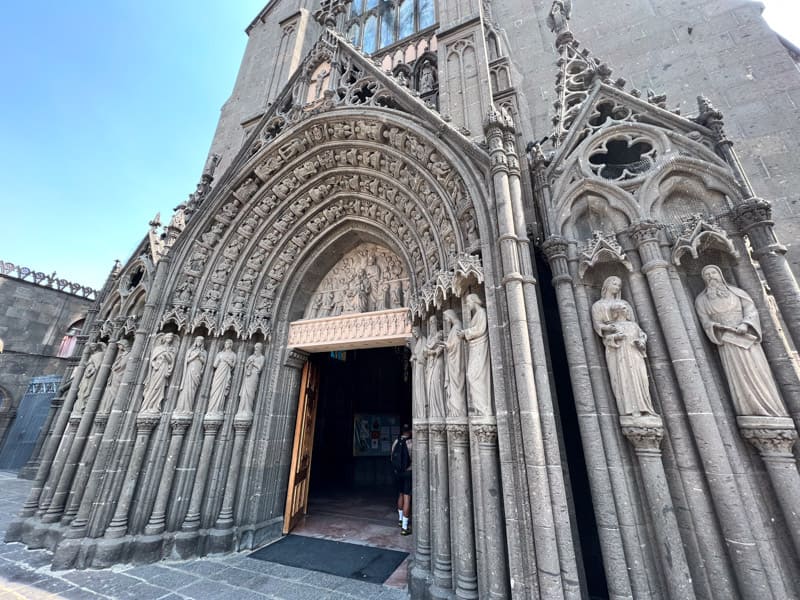
The first thing that I notice when looking at the Parroquia Santiago Apostol is the reddish-brown volcanic stone that covers the exterior of the church. The bell towers and domes are only an afterthought. The materials are locally sourced from the nearby volcano.
The church dates back to the 17th century.


Cristero martyr Santo Toribio Romo is laid to rest in the temple, and there is a statue dedicated to him out front. Father Toribio Romo was originally from Jalostotitlán, Jalisco, in the highlands. He attended the seminary in San Juan de los Lagos before being ordained in Guadalajara. He led ministries in Sayula, Tuxpan, Yahualica, and Cuquío, Jalisco, before being transferred to Tequila.
In the 1920s, the atheist president, Plutarco Elias Calles, instigated a religious war with the catholic population in Mexico. The Calles Laws were a draconian crackdown on the Catholic church and the people practicing the Catholic religion. The rural parts of Jalisco were the center of a popular revolt against the Calles Laws.
Father Torbio Romo continued to celebrate mass and perform the sacraments for which he was ultimately killed by federal forces on February 25th, 1928, in the tequila distillery of Sr. Leon Aguirre.
In 1992, Father Torbio Romo was beatified by Pope John Paul II. It was a really big deal when the Pope came to Jalisco and recognized a local martyr as a saint.
Today, Saint Toribio is the patron Saint of the migrants. Luis Alberto Urrea’s book The Devil’s Highway talks about miracles that are attributed to him and why the migrants need him. The Cristero Wars sparked a large-scale wave of migration from Mexico to the US in the 1920s.
- Address: Sixto Gorjón 16, Centro, Tequila, Jalisco
- Social Media: Facebook
6. National Museum of Tequila


The National Tequila Museum is a small space that looks at the agave plant and the evolution of a multi-billion-dollar business. It is best for people who are already familiar with how tequila is made and can recognize some of the big names in the industry. There are English language descriptions on only some of the exhibits.
From a personal perspective, I thought the exhibits about art and tequila in popular culture were the best. The exhibit on television, movies, radio, and music starts from the 20th century and creates a lot of nostalgia even though I didn’t grow up in Mexico. It was a golden era of entertainment.
The admission costs MX$20 pesos per person, which is the best deal in Tequila, Jalisco.
7. Palacio Municipal (Town Hall)

The local government administrative building is located right on the plaza and houses one of the coolest murals you will find in the State of Jalisco, about the mythology of tequila. You have to come in here and get a picture of the mural. It is one of the most Instagrammable spots in the valley.
8. Museo de los Abuelos

Tequila Sauza has become one of the largest and most recognizable brands of tequila under the direction of large multinational beverage conglomerates.
However, for three generations, dating back to 1873 this was a family-run company. The museum is housed in the 19th-century Sauza family home and houses a number of family heirlooms related to the historic production of tequila and how this family built one of the most recognizable brands on the planet.
It is best to make reservations in advance.
- Address: Calle Albino Rojas 22, Centro, Tequila, Jalisco
- Contact Information: Webpage
9. Los Lavaderos and the Water Well


This is a very old part of Tequila. One of the things that differentiate tequila from the highlands of Jalisco from the Tequila Valles Region is the abundance of water. A channel of the Atizcua River feeds the city from this point.
Modern plumbing didn’t exist until the 1950s and people had to come here to retrieve water for their houses. This is where all of the historic distilleries were located back in the 19th century because there was access to clean, volcanic spring water.
The channel also feeds the public laundry space. Long before the age of Facebook, the original social network in Tequila, Jalisco was the neighborhood laundry facility.
The Lavaderos became one of the most important meeting places for the people of Tequila to trade information and gossip. It was such an important part of daily life that legends and ghost stories soon came to be.

There is a cool bridge above the creek that leads through the ruins of ancient tequila distilleries. It starts with the modern Orandain facility but is right next door to a massive brick building that is falling apart and has huge trees growing out of the walls.
The bridge leads to the El Tequileño distillery (Jorge Salles Cuervo) that goes way back.
This hidden corner of Tequila, Jalisco is one of the coolest parts of Tequila to visit for history buffs.
10. Los Azules Waterfalls

Less than two miles from the main plaza in Tequila, Jalisco is a secluded series of waterfalls called Los Azules. The last part of the hike is a little sketchy because the trail is steep and slippery with loose soil. The waterfalls are dope. The hike through the agave fields is a quintessential Tequila Country activity.
The last time I went to the Los Azules Waterfalls it was on a three-day weekend and there were a lot of people there including some cholos with pitbulls smoking weed on the trail. It is the country around these parts.
I highly recommend hiring a guide if you have not been before. Once you start the descent into the falls the path is not 100% obvious. The trail is steep and slippery in some parts. Wear good shoes, bring water and go early because it can get hot during the spring.
- Address: Google Maps
- Route Map: All Trails
11. Tequila Volcano
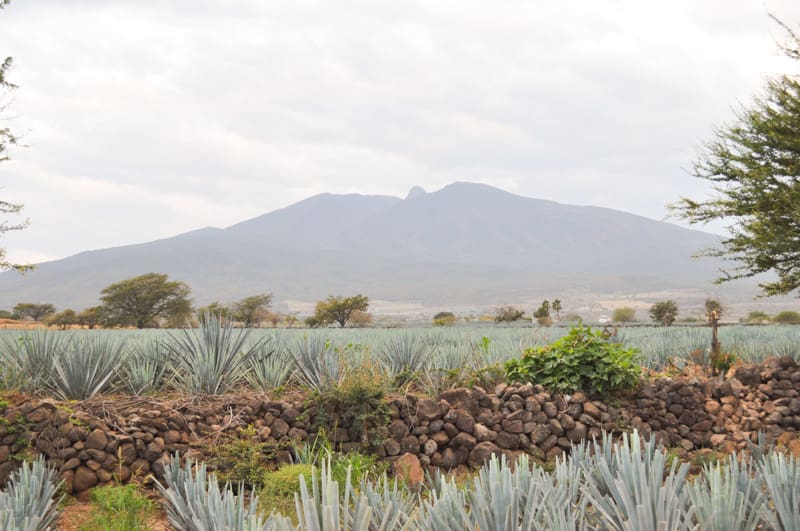
The Tequila Volcano is a popular outdoor recreation area for nature lovers of all sorts. The summit of the dormant volcano is about 12 miles from the town of Tequila but there is a dirt road that gets you close to the summit by car.
There is a gate as you approach the top of the volcano that limits vehicle access but bikes and hikers are welcome to make it all the way to the top.
- Route: AllTrails.com
12. Balneario La Toma
This is a historic swimming hole with a nice waterfall that is a little easier to access than the Azules Waterfalls. This one is more family-oriented.
- Address: Camino a la Toma km 2 La Culebra, Tequila, Jalisco
- Social Media: Facebook
13. Paraíso Azul Swings
On a hill overlooking the Tequila Valley, just a little way outside of town, is the Paraiso Azul complex. They have one of the most beautiful viewpoints where they have set up a series of large swings.
The whole setup is very Instagram friendly with agave fields, swings, and glass vista points.
The Akamba music festival is held at the base of their property every year. They know how to throw a good party on the weekends.
The Best Bars in Tequila
14. Cantina La Capilla
The oldest drinking establishment in Tequila, Jalisco has some stories to tell.
The name, La Capilla or the chapel is a reference to those who drink so much tequila they can no longer stand and drop to their knees like they were praying.
They make a signature cocktail called the Batanga, which is tequila with lime and coke in a salt-rimmed glass.
- Address: Hidalgo 34, Centro, Tequila, Jalisco
- Pro Tip: Order a Batanga cocktail
15. Ixtete Bar & Restaurant
A relative newcomer to the Tequila bar scene, Ixtete has an excellent selection of artisanal, high-end tequilas from across Jalisco.
The bar is located a couple of blocks off of the plaza but is 100% worth looking for. There isn’t any other restaurant or bar in town that has this wide a selection of tequila.
Best Restaurants in Tequila
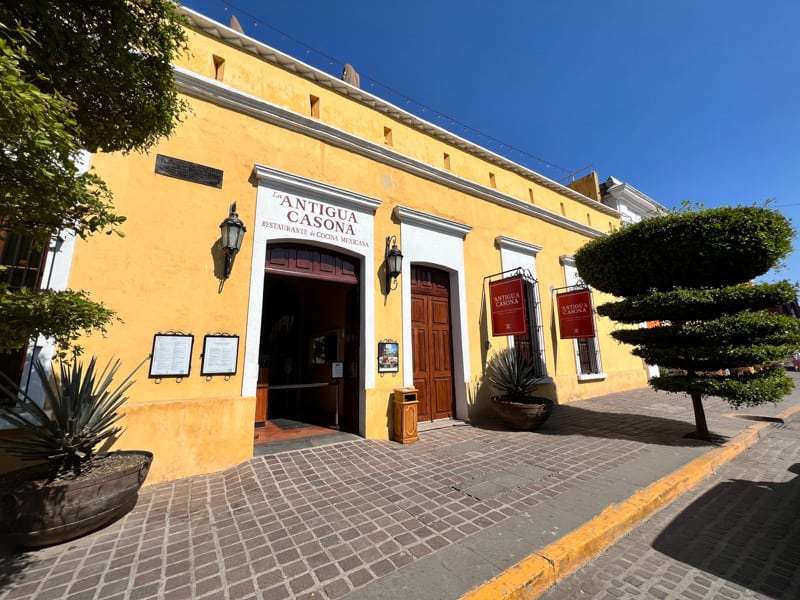
I think it goes without saying that the culinary arts in Tequila are a big part of the draw to the Valles Region. Besides the distilled agave spirits, there is a culture of ranch-style food that you have to experience.
16. Mercado Municipal and the Mercado de Comidas “Cleofas Mota”

I always think it is a good idea to visit the public market when you visit a new town. The Cleofas Mota Food Market is dedicated more to tourism than the public markets in Guadalajara. The market is small and it is filled with small restaurants rather than food stalls. There is usually a mariachi playing in the middle of the market around the fountain.
17. Birriería La Mezcalera
Rustic, ranch-style birria cooked in adobe, wood-burning ovens.
- Address: México 104, Mayahuel, Tequila, Jal.
18. La Cueva de Don Chenobio
Calle Luis Navarro 70, Centro, Tequila, Jalisco
This is the high-end, chef-driven dining experience on the Casa Sauza property. Considering that Sauza is one of the largest and longest-running tequila makers in the world, you can expect that there has been a lot of thought put into the restaurant. Mexican fare and lots of tequila are served daily from 1 pm to 6 pm.
19. La Antigua Casona
Calle Albino Rojas 14, Centro, Tequila, Jalisco

Jose Cuervo’s high-end restaurant inside the swanky Hotel Solar de las Animas is beautiful and has very good food. The baroque details are over the top and your Instagram account will be a lot more interesting after having lunch here. They serve breakfast, lunch, and dinner with some excellent examples of local traditional foods.
20. Patio Mayahua
México 21, Centro, Tequila, Jalisco // Facebook
This breakfast/menudo place only opens on the weekend but they serve a really good breakfast. If you are new to Mexico you may not have had the opportunity to try menudo just yet. Some people have an aversion to trying new cuts of meat like tripe and stomach cuts. If that is the case, order just a bowl of broth. You will love it and probably order a mixed bowl next time.
They also have good chilaquiles and birria but I think you should try the menudo.
21. El Palomar
Vallarta 2, El Rastro, Tequila, Jalisco
El Palomar is situated in an old building on the little plaza in front of Parroquia Santiago Apostol Church. The food is good but the view from the two upstairs tables in the window/patio is fantastic.
Where to Stay in Tequila, Jalisco
There are some really iconic places to stay in Tequila. The magical town has developed a lot of tourist infrastructure in the last decade. Some of the most romantic options are not in Tequila itself but in the neighboring haciendas of the Tequila Valley.
Casa Salles Boutique Hotel
⭐️ Rating: 9.4 /10 | Neighborhood: Tequila | View on Expedia.com
Matices Hotel de Barricas
⭐️ Rating: 8.6 /10 | Neighborhood: Tequila Suburbs | View on Expedia.com
Hotel Solar de las Ánimas Tequila (Mundo Cuervo)
⭐️ Rating: 9.6 /10 | Neighborhood: Tequila | View on Expedia.com
Hotel Solar de las Animas is part of what makes Tequila, Jalisco, such an important tourist destination. The Jose Cuervo group has built what I consider to be one of the premier touristic products in the whole country.
The hotel is a testament to the wealthy ranching culture of the hacienda era. The rooms are adequate but you will not be spending much time there. The restaurants, bars, pools, distilleries, event spaces, waterfalls, and agave fields are ABSOLUTELY INCREDIBLE. There is so much to see and do in this part of Mexico that drinking tequila might actually get in the way of all the other activities like hiking, biking, and horseback riding.
The Hotel Solar de las Animas is an expensive yet worthwhile hotel experience.
A Brief History Of Tequila
The word Tequila has a number of different meanings. Originally, it comes from the Nahuatl word, “Tekilan”: “place of the workers” or “place of tribute” depending on the interpretation.
Long before the drink, there was the Tequila Volcano, the Tequila Valley, and a large population of Native peoples.
The fertile soil around the volcano is one of the reasons that agriculture is so prevalent in this area. The volcano also left large deposits of obsidian that were used to make tools that were traded across the region.
The archeological site at the base of the Tequila Volcano documents a large settlement of people in the region for more than two thousand years. The area has a unique form of agriculture and a ceremonial center that sustained the large population.
Spanish missionaries and conquistadors introduced the Catholic religion and built huge ranches called haciendas. Equestrian culture would evolve and devolop into two of Mexico’s most iconic trends: Mariachi music and Charrería folkloric rodeo.
Tequila the Beverage

Tequila, the beverage, is an agave-based spirit. There are strict rules over who can use the name “Tequila” as a beverage because of intellectual property law. It is a class of mezcal that only uses Weber blue agave and has an appellation of origin.
Old tequila bottle labels called the beverage “vino de mezcal” and “mezcal de Tequila” in centuries past.
Tequila, the spirit, is the most financially lucrative product to come out of the Valley, but the Weber blue agave has been cultivated and treasured by the native people for thousands of years.
Things To Do In Tequila FAQ
These are the most common questions about Tequila that I see in the tequila groups and the Guadalajara travel groups.
Is Tequila Safe?
Yes, Tequila is one of the safest parts of Jalisco. It is safer than Guadalajara, it is safe to rent a car, and safe to walk around at most hours.
The biggest danger in Tequila is drinking too much.
When is the best time to visit Tequila?
Let’s start by answering what is the worst time to visit Tequila. Tequila gets really hot in the spring from April to June.
The rainy season starts in June and lasts until around September or October. The rainy season is kind of enjoyable if you have some flexibility in your schedule to wait out a heavy rain.
It usually doesn’t rain for days straight unless there is a big hurricane nearby. Storm clouds create dramatic skies, and the landscape is bright green. I like my pictures of the Guachimontones Pyramids more during the rainy season than in the dry season.
The one downfall is that a tour could be postponed during a good rain shower. Outdoor activities like hikes and horseback rides can be affected.
My favorite time to visit Guadalajara and Tequila is in the fall. It is after the rainy season so everything is green, but the probabilities of seeing rain are low. The temperatures are hot in September but October and November are lovely. It is warm during the day and brisk at night.
What to wear in Tequila?
This is a major international tourist destination. People wear shorts and sandals, or anything they want all day long.
Considering this is ranching country, the locals wear jeans, boots, and a hat.
If you plan on going out to the agave fields, I highly recommend pants, sturdy shoes, and a wide-brimmed hat for protection.
There is a great hat stand on the side of the road in El Arenal on the free road to Tequila. This part of Mexico makes some beautiful hats. Each region has its own style. A nice hat is one of the best souvenirs you can buy in Mexico.
The temperature can change quickly in the Tequila Valley. You will need a warm jacket at night in the wintertime. Even during the springtime, when it is very hot during the daytime, the nighttime temperatures can be chilly. Not cold, but brisk when the sun goes down.
Is Tequila worth it?
Yes, Tequila is totally worth it. However, I recommend including Tequila as one stop on a tour of the larger Tequila Valley.
Tequila is a great place to visit, but you have to make reservations in advance. If you just take the bus in and take a random tour with average tequila, the experience is just ok.
If you make reservations at the Fortaleza Distillery, stay at Hacienda El Carmen, visit the pyramids, and drink at Cantaritos El Guero, you will never forget Jalisco.
Make sure to search out the top travel experiences in the region.
Is Tequila appropriate for kids?
I have never taken my kids to Tequila. There aren’t as many kid friendly activities in Tequila as there are in other parts of the Valley.
Kids are going to enjoy the Guachimontones Pyramids and the old haciendas more than they are going to enjoy an open air bar.
Kids are not allowed in cantinas and on some of the tours so make sure to plan around that.
Should I rent a car in Tequila?
Yes! My favorite way to explore the Tequila Valley is with a vehicle.
Rent a car from Discover Cars and drive around the Valley. The The Fortaleza Distillery is walking distance from a dozen hotels in Downtown Tequila so you don’t have to worry about driving after a tequila tasting.
One of my favorite experiences was driving through the agave fields and pulling over at the lookout points and taking pictures.
And who doesn’t love pulling over on a whim to eat tacos at a busy restaurant?
You will see more of the region is you have a vehicle.
Final Thoughts On The Best Things To Do In Tequila
Tequila is one of the most popular Pueblos Mágicos in Mexico. It is an easy day trip from Guadalajara and a rich cultural center. It is also a tourist trap with a lot of bars selling average cocktails.
My best recommendation is to be honest about the type of trip you want to have and make a plan in advance.
If you want to tour the top distilleries you will need reservations. Don’t let a barker sell you a tour of a random distillery. Pick the experience that




So interesting. Each post gets better and better. Keep writing and sharing the beauty of Mexico!
Thanks Tom. You and I will keep exploring. I’m looking forward to September!!
Interesting!
Following
How do I contact you guys to ask question about this weekend
Shoot me a line at playasyplazas@gmail.com